In a groundbreaking fusion of biology and technology, researchers have unveiled a revolutionary symbiotic garment capable of harnessing photosynthesis to generate electricity. Dubbed the "Ecological Symbiosis Robe," this living wearable integrates live moss cultures into its fabric, creating a self-sustaining system where plant metabolism powers small-scale electronics. The innovation marks a radical departure from conventional solar technology by embracing biological processes as an energy source.
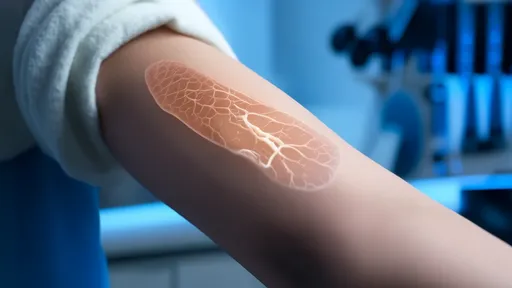
The robe's surface resembles an intricate tapestry of emerald veins, where specially selected Bryophyta species thrive within breathable nanocellulose pockets. These photosynthetic micro-forests continuously convert sunlight into chemical energy, while engineered root networks channel electrons to flexible graphene-based conductors. Unlike static solar panels, the living system dynamically responds to environmental changes - increasing energy production during peak sunlight hours and entering conservation mode under cloud cover.
What makes this technology truly remarkable is its self-repairing nature. Damaged sections of the moss matrix can regenerate over time, maintaining consistent energy output. The garment's microbiome actively regulates moisture levels through transpiration, creating a miniature ecosystem that benefits both wearer and organism. Early adopters report an unexpected psychological benefit - the constant contact with living organisms appears to reduce stress levels, creating what researchers call a "biophilic feedback loop."
Current prototypes generate sufficient power to charge smartphones or small medical devices, with efficiency improving as the moss colonies mature. The system achieves particular success in humid environments where traditional solar panels often underperform. During nighttime hours, stored carbohydrates continue providing residual power, though at reduced capacity. This day-night cycle mirrors natural energy flows rather than the binary on-off operation of conventional systems.
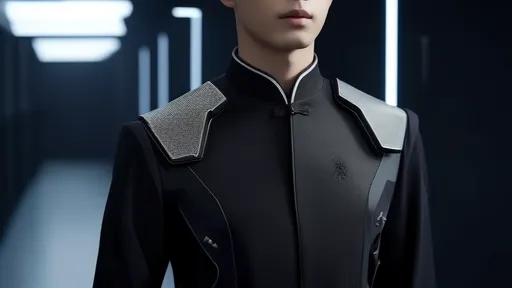
Fashion futurists predict this technology could spawn entirely new clothing categories. Imagine business suits that power tablets during meetings, or athletic wear that charges fitness trackers through sweat-activated microbial reactions. The military has expressed interest in developing camouflage uniforms where the photosynthetic organisms double as natural pattern generators. Urban planners speculate about building facades clad in energy-generating moss panels that also improve air quality.
However, significant challenges remain before widespread adoption. The living components require periodic hydration and cannot survive extreme temperatures, limiting use in arid or polar regions. Ethical questions emerge about creating semi-synthetic organisms for human utility. Some conservationists warn against potential ecological disruptions if modified moss species escape controlled environments. Researchers are working on encapsulation systems and developing hardier moss varieties to address these concerns.
The technology's implications extend far beyond wearable electronics. Principles developed for the symbiotic robe could transform how we approach renewable energy infrastructure. Architects envision "living buildings" where entire exterior surfaces function as photosynthetic power plants. Automotive designers speculate about moss-lined electric vehicle roofs that supplement battery systems. The project's lead scientist remarked, "We're not just building better gadgets - we're learning to collaborate with nature at a fundamental level."
As climate change accelerates, such biomimetic solutions may become increasingly vital. The Ecological Symbiosis Robe represents more than a technical achievement - it symbolizes a philosophical shift toward working with natural systems rather than dominating them. While the technology remains in its infancy, its potential to blur boundaries between organism and machine could redefine sustainable design for generations to come.

By /Oct 22, 2025

By /Jul 25, 2025
By /Jul 25, 2025
By /Jul 25, 2025
By /Jul 25, 2025

By /Jul 25, 2025
By /Jul 25, 2025

By /Jul 25, 2025

By /Jul 25, 2025

By /Jul 25, 2025
By /Jul 25, 2025
By /Jul 25, 2025

By /Jul 25, 2025
By /Jul 25, 2025
By /Jul 25, 2025
By /Jul 25, 2025

By /Jul 25, 2025

By /Jul 25, 2025

By /Jul 25, 2025

By /Jul 25, 2025
