Coloring Chip Waste: A New Process for Coloring Silicon Wafers

Jul 25, 2025 By

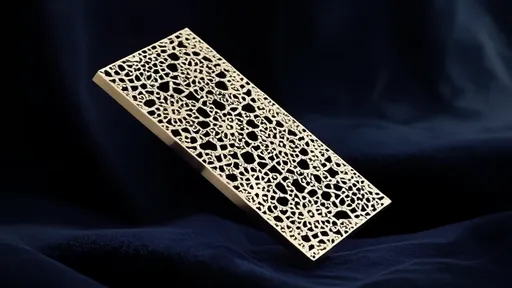
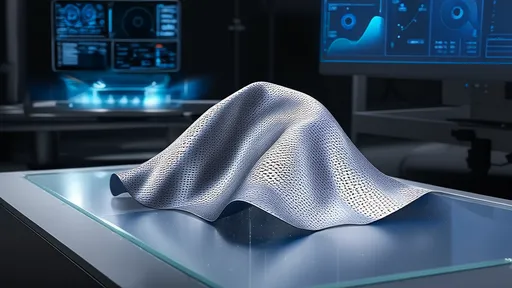
The semiconductor industry has long grappled with the challenge of silicon wafer waste management, but a groundbreaking new coloration process is turning this environmental liability into an opportunity for innovation. Researchers at the Fraunhofer Institute for Silicon Technology have developed a novel method to transform discarded silicon wafers into vibrant, functional materials through controlled oxidation and thin-film interference techniques.

From industrial byproduct to engineered material

What was once considered worthless scrap now shimmers with iridescent hues under the new treatment process. The technique involves precisely controlling the oxidation parameters to grow silicon dioxide layers of specific thicknesses on waste wafers. When light interacts with these thin films, constructive interference creates intense colors ranging from deep blues to golden yellows, depending on the oxide layer's thickness. This phenomenon, similar to what makes soap bubbles appear colorful, has been harnessed to give discarded silicon a second life.

The process begins with sorting wafer fragments by crystal orientation and doping type, as these factors influence the oxidation characteristics. The fragments then undergo a modified thermal oxidation process where temperature, atmosphere, and duration are carefully controlled to achieve the desired optical properties. Unlike standard oxidation processes aimed at creating uniform dielectric layers, this method intentionally creates thickness variations to produce patterned color effects.

Beyond aesthetics: functional applications emerge

While the visual transformation is striking, the real value lies in the material's new functional properties. The colored wafers demonstrate unique light-interaction characteristics that make them suitable for specialized optical applications. Researchers have successfully incorporated the processed material into decorative architectural elements, anti-counterfeiting features for high-value components, and even as calibration standards for optical inspection systems.

One particularly promising application is in photovoltaic systems. The colored silicon exhibits modified light absorption properties that could lead to more efficient solar energy harvesting when used in certain configurations. Early tests show that some color variants actually enhance near-infrared absorption while reducing reflection losses - a potentially valuable trait for next-generation solar cells.

The environmental calculus

From an ecological perspective, the new process represents a significant improvement over traditional recycling methods. Conventional silicon recycling typically involves energy-intensive remelting processes that often degrade the material's purity. The coloration technique, by contrast, consumes relatively little energy and preserves the wafer's structural integrity. Industry analysts estimate that widespread adoption could divert thousands of metric tons of silicon waste from landfills annually.

Perhaps most importantly, the process creates economic value where none previously existed. Waste wafers that would have incurred disposal costs can now be transformed into premium-priced specialty materials. Several major semiconductor manufacturers have already begun pilot programs to implement the technology in their production facilities, seeing it as both an environmental responsibility initiative and a potential new revenue stream.

The development team continues to refine the process, working to expand the color palette and improve consistency across different wafer types. They're also investigating methods to apply the technique to other semiconductor materials beyond silicon. As the electronics industry faces increasing pressure to improve its sustainability profile, innovations like wafer coloration demonstrate how environmental challenges can spark creative technical solutions with commercial potential.

Looking ahead, researchers anticipate broader applications in consumer electronics, where colored semiconductor materials could enable new design possibilities for visible components. The automotive industry has also expressed interest in using the material for specialized sensors and decorative trim elements in high-end vehicles. What began as an experiment in waste valorization may well become a standard process in multiple industries, proving that one company's scrap can indeed become another's treasure.

Recommend Posts
Fashion

Nanjing International Fashion Week Concludes: Intangible Cultural Heritage Meets Fashion in a Palace Runway Show, Astonishing Time

By /Oct 22, 2025

As the final notes of the haunting guqin melody faded into the night air, the last model disappeared behind the crimson pillars of the Dacheng Hall, leaving behind a stunned audience that seemed to have traveled through time itself. The 2023 Nanjing International Fashion Week concluded last Sunday not with a whisper, but with a cultural earthquake that has reverberated through both fashion and heritage preservation circles worldwide.
Fashion

Cyber Qipao: Optical Fiber Circuit Dragon Pattern Luminous

By /Jul 25, 2025

The fusion of traditional Chinese aesthetics with cutting-edge technology has birthed a mesmerizing new trend in wearable art: cyber qipao. These luminous garments, woven with fiber-optic circuits and adorned with dragon motifs that glow in the dark, are redefining the boundaries between cultural heritage and futuristic design. At nightclubs in Shanghai or tech exhibitions in Shenzhen, these radiant dresses pulse with an otherworldly energy, their intricate patterns breathing like living creatures under ultraviolet light.
Fashion

Skin Transplantation Trend: Cell-Cultured Personalized Epidermis

By /Jul 25, 2025

The world of fashion has always been a realm of constant reinvention, where boundaries are pushed and norms are challenged. In recent years, an unexpected crossover between medical science and haute couture has emerged, giving rise to what some are calling "skin graft fashion." This avant-garde movement explores the possibilities of using lab-grown, personalized epidermis as a medium for wearable art and self-expression.
Fashion

Smart Zhongshan Suit: Graphene Heating Stand Collar

By /Jul 25, 2025

The fusion of traditional Chinese fashion with cutting-edge technology has taken a bold step forward with the introduction of the Smart Zhongshan Suit, a revolutionary garment that combines classic aesthetics with modern functionality. At the heart of this innovation lies the integration of graphene heating technology into the suit's stand-up collar, offering wearers both style and comfort in colder climates. This breakthrough represents not just a fashion statement, but a significant leap in wearable technology.
Fashion

Cellular-level Embroidery: Micro-robotic Arm for Protein Stitching

By /Jul 25, 2025

In a groundbreaking fusion of biotechnology and nanotechnology, researchers have pioneered a revolutionary technique known as cellular-level embroidery, where microscopic robotic arms manipulate individual proteins with unprecedented precision. This emerging field, often referred to as protein stitching, leverages advanced micro-mechanical systems to assemble biological molecules into complex, functional structures. The implications for medicine, materials science, and synthetic biology are staggering, offering a glimpse into a future where human-engineered cellular architectures could outperform natural systems.
Fashion

Digital Kimono: Electrochromic Sleeve Projector Screen

By /Jul 25, 2025

In a groundbreaking fusion of traditional craftsmanship and cutting-edge technology, researchers at Kyoto University have unveiled a prototype for "Digital Kimono: Electrochromic Furisode Projection Screen" – a wearable display system that transforms the iconic Japanese furisode (long-sleeved kimono) into an interactive canvas. This innovation marks the first successful integration of electroluminescent materials with traditional silk-weaving techniques, creating garments that change patterns and display dynamic visuals in response to environmental stimuli.
Fashion

0.01mm Gold Foil: Nanoscale Metallic Fabric Coating

By /Jul 25, 2025

The world of advanced materials has witnessed a groundbreaking innovation with the development of 0.01mm gold foil coatings for nanoscale metallic fabrics. This ultra-thin gold foil, measuring a mere 10 micrometers in thickness, represents a significant leap forward in the field of functional textiles and wearable technology. Researchers and material scientists are hailing this development as a potential game-changer for industries ranging from fashion to medical technology.
Fashion

Nuclear Waste Glass: The Fashionable Application of Radiation Protection

By /Jul 25, 2025

In a world where sustainability and innovation collide, an unexpected material is making waves in the fashion industry: nuclear waste glass. Once considered a hazardous byproduct of energy production, this radioactive material is being transformed into stunning, functional fashion pieces that challenge our perceptions of both style and safety. Designers and scientists are collaborating to create wearable art that not only turns heads but also serves as a conversation starter about the future of radiation protection.
Fashion

Core Iron-Nickel Alloy: Simulating Earth's Core Material Jewelry

By /Jul 25, 2025

In the depths of our planet lies a mystery that has captivated scientists and dreamers alike—the Earth's core. Composed primarily of an iron-nickel alloy, this seething, molten heart powers our magnetic field and shapes the very ground beneath our feet. Now, a bold new venture in jewelry design seeks to bring a piece of that hidden world to the surface. By simulating the composition and aesthetic of core materials, artisans are crafting wearable pieces that echo the raw power and beauty of Earth's center.
Fashion

Single-Molecule Staining: Quantum Dots for Precise Localization Coloring

By /Jul 25, 2025

In the rapidly evolving field of nanotechnology, quantum dots (QDs) have emerged as a groundbreaking tool for single-molecule imaging. These semiconductor nanocrystals, known for their exceptional brightness and photostability, are now enabling scientists to achieve unprecedented precision in molecular labeling. Unlike traditional fluorescent dyes, which often suffer from photobleaching and broad emission spectra, quantum dots offer a robust solution for long-term, high-resolution imaging at the single-molecule level.
Fashion

Space Cowboy: Lunar Dust Protection Denim Fabric

By /Jul 25, 2025

The intersection of fashion and space technology has always been a fascinating frontier, but few collaborations capture the imagination quite like the emergence of Space Cowboy: Moon Dust-Resistant Denim. This innovative fabric represents a leap forward in textile engineering, blending the rugged charm of classic Americana with cutting-edge material science designed to withstand the harsh lunar environment. Born from a partnership between aerospace engineers and denim artisans, this fabric isn’t just a stylistic statement—it’s a testament to human ingenuity.
Fashion

Micro-engraved Lace: Laser Carving Sub-micrometer Holes

By /Jul 25, 2025

The intersection of art and technology has always been a fertile ground for innovation, but few developments have been as breathtaking as the recent breakthroughs in micro-engraving techniques. Among these, the ability to laser-carve submicron pores into delicate materials like lace represents a leap forward in precision engineering. This process, which merges the intricacy of traditional craftsmanship with cutting-edge laser technology, is redefining the boundaries of what’s possible in both decorative and functional textiles.
Fashion

Gravity Cancellation Skirt: Superconducting Maglev System

By /Jul 25, 2025

The concept of gravity-defying attire has long been relegated to the realms of science fiction, but recent advancements in superconductive technology are bringing us closer to a reality where clothing could literally lift us off the ground. The gravity-counteracting skirt, powered by ultra-efficient superconducting magnetic levitation systems, represents a fascinating intersection of fashion, physics, and futuristic engineering. Unlike traditional anti-gravity fantasies reliant on hypothetical technologies, this innovation leverages real-world breakthroughs in material science and electromagnetic theory.
Fashion

Plasma Shaping: Permanent Wrinkle-Free Without Heat Source

By /Jul 25, 2025

The world of textile engineering has witnessed a groundbreaking advancement with the development of plasma-induced permanent wrinkle without thermal sources. This revolutionary technique challenges conventional methods that rely on heat or chemical treatments to create lasting folds in fabrics. Unlike traditional approaches, plasma shaping offers an environmentally friendly alternative that preserves fabric integrity while achieving remarkable durability.
Fashion

Time-Traveling Fabric: Photochromic Material Records the Path of Wear

By /Jul 25, 2025

The fashion industry has always been at the forefront of innovation, blending technology with artistry to create garments that transcend mere functionality. One of the most intriguing developments in recent years is the emergence of time-traveling fabric—a revolutionary material that captures and displays the wearer’s journey through photochromic technology. This isn’t science fiction; it’s a tangible breakthrough that merges fashion with memory, allowing clothing to become a living archive of personal experiences.
Fashion

Emotional Metabolism Clothing: Early Health Warnings from Sweat Composition"

By /Jul 25, 2025

The human body communicates in ways we are only beginning to understand. Among its most intimate messengers is sweat—a complex fluid often dismissed as mere biological waste. Recent advances in biosensing technology have revealed that our perspiration carries a wealth of information about our physical and emotional states, functioning as a real-time diagnostic medium. This discovery has given rise to an emerging field of wearable technology: emotion-metabolizing garments capable of interpreting the biochemical signatures of stress, joy, or fatigue through sweat analysis.
Fashion

Symbiotic Moss Robe: Living Photosynthesis Power Supply

By /Jul 25, 2025

In a groundbreaking fusion of biology and technology, researchers have unveiled a revolutionary symbiotic garment capable of harnessing photosynthesis to generate electricity. Dubbed the "Ecological Symbiosis Robe," this living wearable integrates live moss cultures into its fabric, creating a self-sustaining system where plant metabolism powers small-scale electronics. The innovation marks a radical departure from conventional solar technology by embracing biological processes as an energy source.
Fashion

Quantum Tang Suit: Entangled Particle Buckle Device

By /Jul 25, 2025

The world of quantum physics and traditional Chinese fashion have collided in the most extraordinary way with the development of the Quantum Tangzhuang - a revolutionary garment that incorporates entangled particle technology into the ancient art of pan kou (Chinese knot buttons). This groundbreaking fusion of cutting-edge science and cultural heritage is sending shockwaves through both the scientific community and the fashion industry.
Fashion

Coloring Chip Waste: A New Process for Coloring Silicon Wafers

By /Jul 25, 2025

The semiconductor industry has long grappled with the challenge of silicon wafer waste management, but a groundbreaking new coloration process is turning this environmental liability into an opportunity for innovation. Researchers at the Fraunhofer Institute for Silicon Technology have developed a novel method to transform discarded silicon wafers into vibrant, functional materials through controlled oxidation and thin-film interference techniques.
Fashion

Regenerated Fiber from Cigarette Butts: Purification Technology of Cellulose Acetate

By /Jul 25, 2025

The global push for sustainable materials has led to groundbreaking innovations in recycling technologies, particularly in the realm of cigarette waste. Among these advancements, the purification of cellulose acetate from discarded cigarette filters stands out as a promising solution to both environmental pollution and resource recovery. This process not only addresses the growing issue of cigarette butt litter but also transforms a persistent waste product into a valuable industrial material.