You know that moment of frustration when you reach for your favorite necklace, only to find it hopelessly knotted with three others in your jewelry box? It feels like a universal law of physics: necklaces left unattended will inevitably form a tangled mess. I spent years untangling delicate chains with a sewing needle, losing precious minutes of my morning routine. The final straw was the day a vintage heirloom chain snapped during one of these frantic sessions. That was it. I declared war on necklace tangling, and after extensive research and experimentation, I found a system that genuinely works.
By the end of this, you'll have a toolkit of simple, effective methods to keep your necklaces separated, accessible, and tangle-free. We'll start by exploring the surprisingly simple household items that can solve this problem instantly, then move on to more permanent and aesthetically pleasing storage solutions that double as decor. We'll also cover the crucial dos and don'ts for handling delicate chains to prevent future knots from forming in the first place.
The Game-Changing Power of Straws and Toilet Paper Rolls
Before investing in any special organizers, look no further than your kitchen or bathroom. One of the most effective and immediate fixes involves using a simple drinking straw. Yes, really. For any necklace with a clasp, simply thread one end of the chain through the straw, then fasten the clasp. The straw acts as a rigid barrier, preventing the chain from looping around itself and its neighbors. It’s a zero-cost hack that works wonders for travel or for organizing a drawer quickly.
Another household hero is the cardboard tube from a roll of toilet paper or paper towels. This is perfect for heavier statement necklaces or those without a straightforward clasp. You can lay the necklace around the circumference of the tube, and the cardboard provides enough structure to keep it from collapsing into a knot. I started by lining up a dozen of these tubes in a drawer, each holding a single necklace. The difference was immediate. No more jumbled pile. The key here is to ensure the necklaces aren't crammed too tightly together; give each one its own dedicated space on a tube or straw.
Upgrading to Dedicated Jewelry Organizers
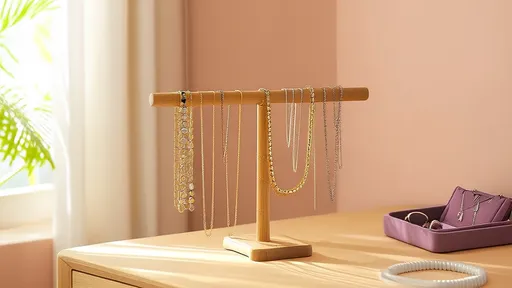
While the DIY methods are brilliant, if you have an extensive collection, you might crave something more streamlined and permanent. This is where dedicated jewelry organizers come in. I tested several types, from hanging organizers with clear pockets to stackable trays with individual compartments. The clear winner for everyday ease of access was a standing jewelry tree with multiple branches. It allows you to drape each necklace separately, making your choice visible at a glance and completely eliminating the possibility of contact between chains.
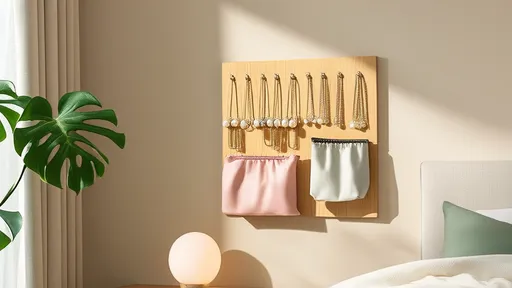
For those with limited counter or dresser space, a wall-mounted rack or a set of small hooks inside a closet door is a fantastic space-saver. I installed a simple, decorative hook rail on my wall, and hanging my necklaces there has become part of my evening routine. Not only does it keep them untangled, but it also turns them into a piece of wall art. A common mistake is hanging too many necklaces on one hook, which defeats the purpose. The rule is one hook, one necklace. Trust me, the extra few hooks are worth the investment.
The Critical Role of Proper Clasping
Here’s a step that many people skip, but it’s arguably the most important: always, always fasten the clasp before storing your necklace. An unclasped necklace is a knot waiting to happen. The loose ends can easily snag on other chains, weaving themselves into a tight, frustrating web. Making a habit of clasping your necklace as you take it off is the single easiest habit you can adopt to prevent tangles. It takes two seconds and saves you minutes, or even hours, of untangling later.
I learned this the hard way. I used to toss my daily wear necklace into a small dish without clasping it, thinking it was safe alone. Within a week, it had managed to tie itself into a knot so tight I had to use magnifying glasses and tweezers to free it. Now, the moment a necklace comes off, the clasp goes on. It doesn't matter if you're using a straw, a hook, or a velvet tray—this one non-negotiable step is your first line of defense.
Tackling Delicate and Fine Chains
Fine chains, like those on delicate pendants or vintage pieces, are the most prone to tangling and the most susceptible to damage during untangling. For these, you need a gentler approach. Laying them flat in a dedicated, lined jewelry box with individual compartments is ideal. If you don't have a multi-compartment box, a great alternative is to store them in small, separate zip-top plastic bags. This might sound unglamorous, but it works perfectly. You can see each necklace, and the plastic creates a smooth barrier that prevents knots from forming.
Another pro-tip for delicate chains is to avoid storing them hanging for long periods, especially if they are heavy. The constant pull of gravity can stretch and weaken fine links over time. For my most precious fine gold chains, I use the bag method and store them flat in a drawer. It keeps them safe, untangled, and in perfect condition. The goal is to minimize movement and friction, which are the main culprits behind those dreaded knots.
What to Do When a Tangle Happens
Even with the best system, a tangle might occasionally occur. The worst thing you can do is pull on it forcefully. This tightens the knot and can break the chain. Instead, you need patience and the right tools. Lay the necklace on a flat, well-lit surface. Get a pair of fine-tipped tweezers or a straight pin. The trick is to gently loosen the knot by working from the outside in, using the pin to carefully manipulate the loops. Don't try to find the "ends" first; focus on creating slack in the knot itself.
I keep a small "untangling kit" in my drawer: a pin, a pair of tweezers, and a soft cloth to work on. For particularly stubborn knots, a tiny drop of baby oil or sewing machine oil on the knot can provide lubrication and help the chains slide apart. The key is to stay calm and work slowly. Rushing almost always leads to a broken chain, a lesson I wish I had learned sooner.
The Mindset Shift: Jewelry Care as Self-Care
Beyond the practical hacks, I discovered that organizing my necklaces transformed from a chore into a small act of self-care. That moment of choosing an untangled, ready-to-wear piece in the morning feels luxurious and calm. It removes a tiny source of daily stress and allows me to appreciate my collection. My jewelry is no longer a source of frustration hidden in a box but a curated collection I can enjoy and access effortlessly.
This system isn't about achieving perfection; it's about creating a simple, sustainable routine that honors the pieces you've chosen to adorn yourself with. It’s a reminder that taking a few extra seconds to care for our belongings can bring a disproportionate amount of peace and order to our daily lives.
Start with one method today—maybe just clasping your necklaces before you put them away. You'll be amazed at how such a small shift can eradicate the annoyance of tangled chains for good. Your future, more relaxed self will thank you as you glide through your morning, effortlessly selecting the perfect accessory to start your day.
By Sophia Lewis/Nov 14, 2025
By Jessica Lee/Nov 14, 2025
By Laura Wilson/Nov 14, 2025

By Eric Ward/Nov 14, 2025
By Ryan Martin/Nov 14, 2025
By William Miller/Nov 14, 2025

By James Moore/Nov 14, 2025
By Joshua Howard/Nov 14, 2025
By Noah Bell/Nov 14, 2025
By Lily Simpson/Nov 14, 2025
By Eric Ward/Nov 14, 2025
By Emma Thompson/Nov 14, 2025
By Sarah Davis/Nov 14, 2025
By Megan Clark/Nov 14, 2025
By Joshua Howard/Nov 14, 2025
By Megan Clark/Nov 14, 2025
By William Miller/Nov 14, 2025
By William Miller/Nov 14, 2025
By Laura Wilson/Nov 14, 2025

By Laura Wilson/Nov 14, 2025
